
Email Address
jaagochempharma@gmail.com
Phone Number
(+91) 63049 31787
Our Location
SP Nagar, Hyderabad - 500018
jaagochempharma@gmail.com
(+91) 63049 31787
SP Nagar, Hyderabad - 500018
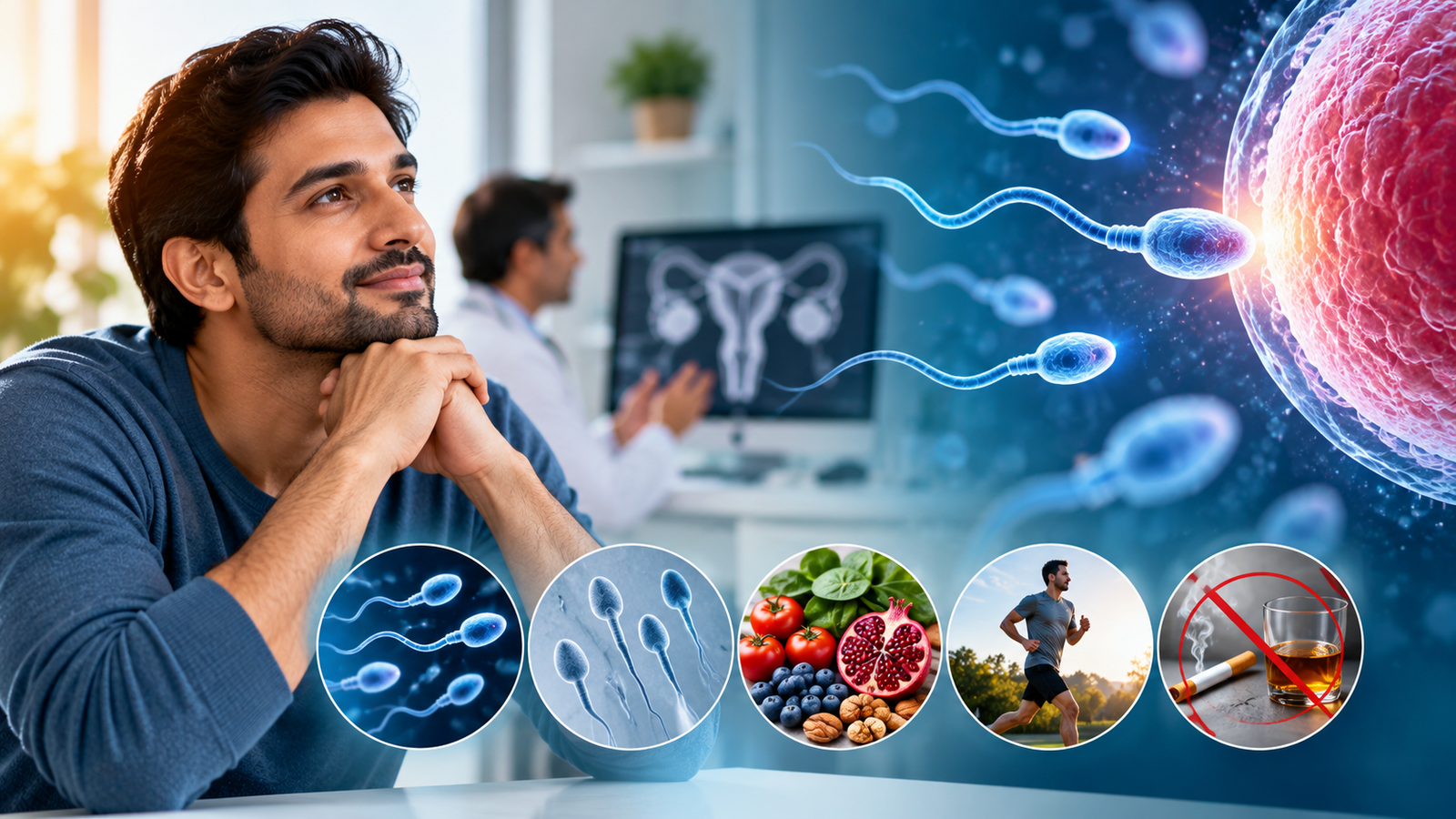
Understanding sperm health, oxidative stress, and nutritional support for male reproductive wellness
Male reproductive health plays an important role in a couple’s ability to conceive. Male infertility can be associated with problems involving sperm production, movement, shape, or delivery. Hormonal imbalances, medical conditions, lifestyle factors, and oxidative stress may all contribute to reduced sperm quality.
Understanding the causes of low sperm count and poor sperm motility can help men recognise when to seek medical advice. Although certain nutrients and antioxidants have been studied for their potential role in sperm health, supplements should be considered within a broader approach to fertility assessment and treatment
Male infertility refers to a reduced ability to contribute to conception. It can result from abnormalities in sperm production, sperm function, reproductive anatomy, or the processes involved in delivering sperm.
A semen analysis is one of the main investigations used to assess male reproductive health. It measures several characteristics of semen and sperm, including:
Abnormal semen parameters do not automatically mean that natural conception is impossible. Results can vary between samples and should be interpreted alongside medical history, physical examination, and other relevant investigations. A clinician may recommend repeat testing when appropriate.
Low sperm count, also known as oligozoospermia, means that the concentration of sperm in semen is below the relevant reference range. It may result from several medical, hormonal, genetic, and environmental factors.
Common potential causes include:
Hormones produced by the brain and reproductive organs help regulate sperm production. Disruptions involving testosterone, follicle-stimulating hormone (FSH), luteinizing hormone (LH), or other hormonal signals may affect sperm production.
A varicocele is an enlargement of veins within the scrotum. In some men, it is associated with impaired sperm production or quality and may contribute to fertility difficulties.
Certain genetic conditions can affect testicular development, hormone production, or the process of making sperm. Further investigations may be appropriate when severe sperm abnormalities are identified.
Some reproductive tract infections and previous testicular injuries can affect sperm production or the transport of sperm. The impact depends on the underlying cause and severity.
Smoking, excessive alcohol consumption, obesity, and some metabolic conditions may be associated with poorer semen quality. Exposure to certain environmental toxins and prolonged excessive heat around the testes may also be relevant.
Some medicines can affect reproductive function. External testosterone and anabolic steroids are particularly important considerations because they can suppress the hormonal signals required for sperm production.
Men planning to conceive should discuss medicines and supplements with a qualified healthcare professional rather than stopping prescribed treatment independently.
In some cases, the cause of low sperm count remains unexplained. A fertility specialist can help determine which investigations and treatment options are appropriate.
Sperm motility describes how effectively sperm move. Progressive motility is particularly important because sperm need to travel through the female reproductive tract to reach an egg.
Reduced sperm motility is known as asthenozoospermia. It may occur alongside low sperm count or abnormal sperm morphology, although these problems do not always occur together.
Potential contributing factors include:
Sperm contain mitochondria, which contribute to the energy required for movement. Normal sperm function also depends on the integrity of the sperm membrane, cellular structures, and genetic material.
A semen analysis can help identify reduced motility, but further assessment may be needed to understand the cause.
The body naturally produces reactive oxygen species (ROS) during normal cellular processes. In controlled amounts, these molecules participate in normal physiological functions, including certain aspects of sperm activity.
Oxidative stress occurs when reactive oxygen species exceed the body’s ability to regulate them through antioxidant defences.
Excessive oxidative stress has been associated with several aspects of impaired sperm function, including:
Oxidative stress is only one possible contributor to male infertility. Not all men with fertility difficulties have elevated oxidative stress, and testing is not necessary or useful in every case. Clinical evaluation should guide decisions about further investigations.
Antioxidants help regulate oxidative processes and protect cells from excessive oxidative damage. Several nutrients and compounds have been investigated for their potential effects on sperm concentration, motility, morphology, and other reproductive measures.
However, evidence varies considerably between ingredients and studies. Improvements in semen parameters do not necessarily translate into higher pregnancy or live-birth rates.
Coenzyme Q10 is a compound involved in mitochondrial energy production. It also functions as an antioxidant within cells.
Some clinical studies have reported improvements in sperm concentration or motility following CoQ10 supplementation in selected men with fertility difficulties. However, the evidence remains limited, and a reliable improvement in pregnancy or live-birth rates has not been established.
Ubiquinol is the reduced form of CoQ10. It is involved in the same biological system, but evidence for one formulation should not automatically be assumed to prove the effectiveness of every product containing it.
L-carnitine plays a role in transporting long-chain fatty acids into mitochondria, where they can be used for energy production. It is present in relatively high concentrations in the male reproductive tract and has been investigated for its possible role in sperm movement.
Some studies suggest that carnitine supplementation may improve selected semen parameters in certain men. However, the evidence is not conclusive regarding pregnancy and live-birth outcomes, and benefits may depend on individual circumstances.
Astaxanthin is a naturally occurring carotenoid with antioxidant properties. It has attracted scientific interest because oxidative stress may affect sperm membranes and other cellular structures.
Although its biological properties provide a rationale for further research, clinical evidence establishing astaxanthin as an effective treatment for male infertility remains limited. It should not be regarded as a proven fertility treatment.
Lycopene is a carotenoid found in foods such as tomatoes and certain other fruits. It has antioxidant properties and has been studied in relation to sperm quality.
Research has explored possible associations between lycopene intake and semen parameters, but the evidence is insufficient to conclude that supplementation reliably improves fertility outcomes. Including a variety of fruit and vegetables in a balanced diet remains a practical way to obtain dietary antioxidants.
Zinc and selenium are essential trace elements involved in normal physiological functions, including reproductive processes and antioxidant defence systems.
Inadequate intake or deficiency can affect general health, and correcting a confirmed deficiency is important. However, taking additional zinc or selenium when nutritional status is already adequate does not necessarily improve fertility. Excessive supplementation may also cause harm.
A healthcare professional can help determine whether supplementation is appropriate and whether it could interact with other medicines or supplements.
L-arginine is an amino acid involved in protein metabolism and the production of nitric oxide, a molecule that helps regulate blood vessel function and other biological processes.
Its potential role in male reproductive health has been investigated, but evidence establishing L-arginine as an effective treatment for male infertility remains insufficient. It should not replace diagnostic evaluation or evidence-based fertility care.
Healthy daily habits can support general wellbeing and may help address some modifiable factors associated with semen quality. They cannot, however, correct every cause of infertility.
Include a variety of vegetables, fruits, whole grains, pulses, nuts, seeds, and suitable protein sources. A balanced eating pattern provides essential nutrients without relying exclusively on supplements.
Regular exercise supports cardiovascular and metabolic health. Choose an activity level that is appropriate for your health and fitness, and avoid excessive exercise or unprescribed performance-enhancing substances.
Smoking is associated with poorer reproductive health, and excessive alcohol consumption can affect general and reproductive health. Avoiding tobacco and limiting alcohol are sensible steps for men planning to conceive.
Adequate, consistent sleep supports general health and normal physiological function. Persistent sleep difficulties should be discussed with a healthcare professional when they affect daily wellbeing.
External testosterone and anabolic steroids can suppress the hormonal signals required for sperm production and may substantially reduce sperm count. Men who wish to preserve fertility should seek medical advice before using these substances.
Discuss regular medicines, supplements, occupational chemicals, and significant heat exposure with a healthcare professional if fertility is a concern. Do not discontinue prescribed medicines without medical guidance.
A fertility evaluation is generally recommended when a couple has not conceived after 12 months of regular, unprotected intercourse. Assessment is often recommended after six months when the female partner is aged 35 years or older. Earlier evaluation may be appropriate when known risk factors or reproductive health concerns are present.
Men should consider seeking medical advice sooner if they have a history of testicular injury, undescended testes, reproductive tract infections, testicular surgery, sexual or ejaculatory difficulties, or previous abnormal semen analysis results.
Both partners may need assessment because fertility difficulties can involve male factors, female factors, or a combination of both.
Depending on the findings, a clinician may recommend repeat semen analysis, hormone testing, examination for varicocele, genetic investigations, or other targeted tests. Treatment depends on the cause and may include addressing an underlying condition, specific medical treatment, surgery in selected cases, or assisted reproductive techniques.
Antioxidant supplements are being studied as a possible supportive option for selected men with fertility difficulties. Some studies report improvements in individual semen parameters, but the overall evidence is inconsistent.
It is important to distinguish between three different outcomes:
Evidence supporting one of these outcomes does not automatically establish the others. The effectiveness of a specific supplement also depends on its formulation, dose, quality, and the individual taking it.
Before starting antioxidant supplements, discuss their potential benefits, limitations, interactions, and suitability with a qualified healthcare professional.
Male infertility can result from hormonal, genetic, anatomical, medical, environmental, and lifestyle-related factors. Low sperm count and poor sperm motility are important findings, but they need to be interpreted as part of an individual clinical assessment.
Oxidative stress is one area of ongoing research, and compounds such as CoQ10, L-carnitine, astaxanthin, lycopene, zinc, selenium, and L-arginine have been investigated for their possible roles in reproductive health. However, antioxidant supplements have not been conclusively shown to improve pregnancy or live-birth rates in all men with infertility.
A comprehensive approach combines timely medical evaluation, healthy lifestyle habits, correction of confirmed nutritional deficiencies, and evidence-based fertility treatment when needed.
Explore reliable health information and learn about nutritional ingredients that have been studied in relation to male reproductive wellness.
Medical disclaimer: This article is intended for educational purposes only and does not replace professional medical advice, diagnosis, or treatment. Evidence relating to individual ingredients does not establish the effectiveness of a particular product. Consult a qualified healthcare professional for personalised fertility assessment and treatment.