
Email Address
jaagochempharma@gmail.com
Phone Number
(+91) 63049 31787
Our Location
SP Nagar, Hyderabad - 500018
jaagochempharma@gmail.com
(+91) 63049 31787
SP Nagar, Hyderabad - 500018
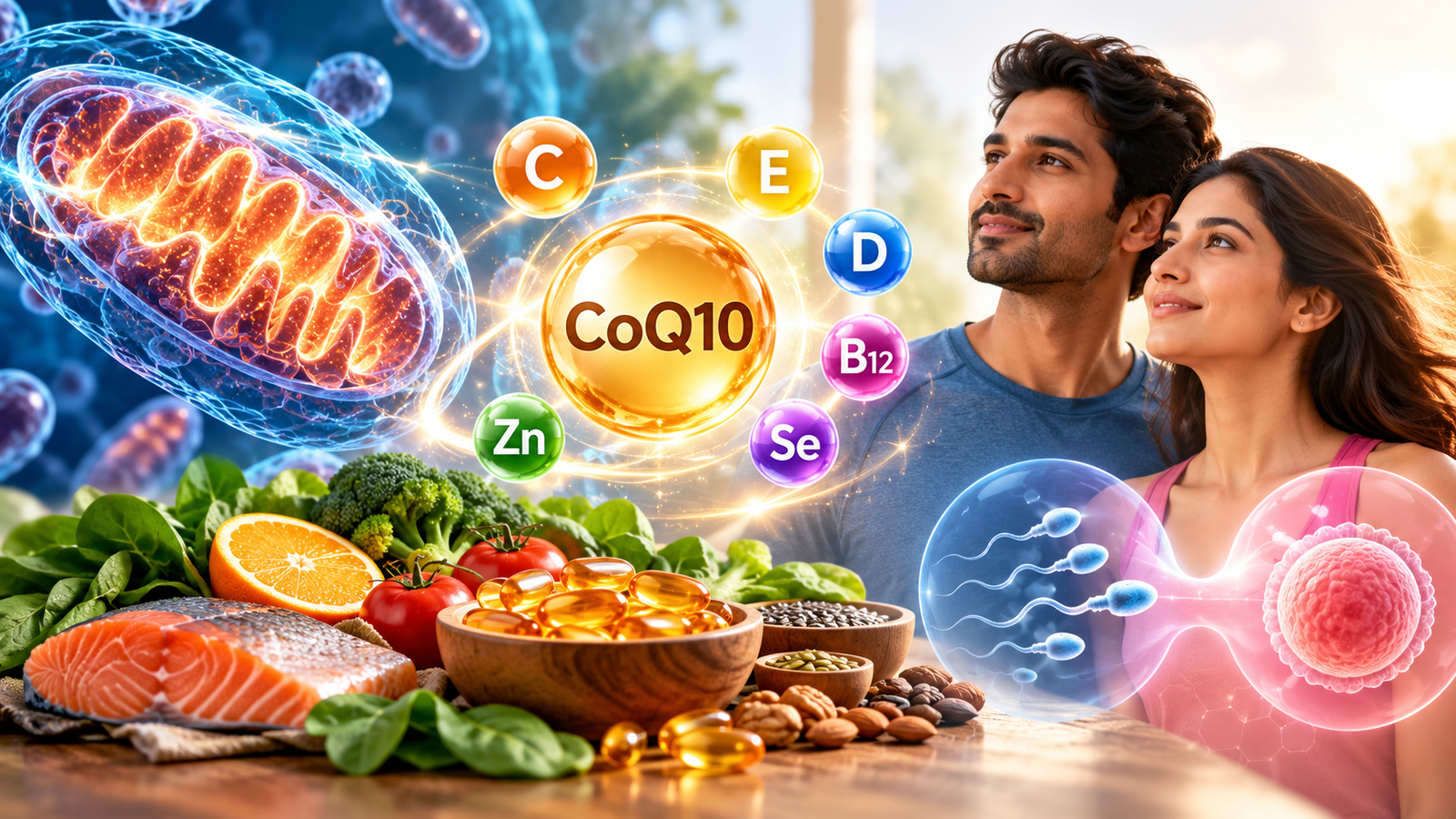
Understanding mitochondrial function, oxidative stress, and the role of essential nutrients in cellular wellness
Every cell in the human body needs energy to perform its essential functions. From muscle movement and metabolism to reproductive processes, cellular energy production is fundamental to maintaining normal physiological health.
Mitochondria, often described as the energy-producing structures of cells, play a central role in this process. Coenzyme Q10 (CoQ10), vitamins, minerals, and antioxidants contribute to normal energy metabolism, cellular function, and the body’s defence against excessive oxidative damage.
Understanding how these nutrients work can help individuals make informed decisions about nutrition and supplementation, including their potential relevance to male and female reproductive health.
Cells obtain energy from nutrients through a series of biochemical reactions. Mitochondria help convert energy derived from carbohydrates, fats, and other metabolic fuels into adenosine triphosphate (ATP), the primary energy-carrying molecule used by cells.
ATP supports several essential processes, including:
Efficient cellular energy production depends on several interacting systems, including mitochondrial function, nutrient availability, and the body’s ability to regulate oxidative processes.
Not every woman with PCOS experiences all these features. Importantly, the presence of ovarian cysts is not necessary for a PCOS diagnosis. Diagnosis generally involves assessing symptoms, hormone levels, and other possible causes under medical guidance.
Coenzyme Q10 is a naturally occurring, fat-soluble compound found in many tissues throughout the body, particularly within cellular membranes and mitochondria. It is also known as ubiquinone.
CoQ10 performs two important biological functions.
CoQ10 participates in the mitochondrial electron transport chain, a series of processes that help generate ATP. It transfers electrons between components of this system, contributing to normal cellular energy metabolism.
Because energy production is essential to many tissues, CoQ10 continues to be studied for its potential relevance to cellular function and selected health conditions.
CoQ10 also participates in the body’s antioxidant system. Its reduced form helps protect cellular membranes and other structures from excessive oxidative damage.
These functions make CoQ10 an important component of normal cellular physiology. However, its biological role does not automatically mean that taking a supplement will improve energy levels, prevent disease, or enhance fertility in every individual.
CoQ10 exists in two principal forms that participate in the body’s natural CoQ10 cycle.
Ubiquinone: The oxidised form of CoQ10, which participates in electron transport and can be converted into its reduced form.
Ubiquinol: The reduced form of CoQ10, which contributes to antioxidant activity and can be converted back into ubiquinone.
Both forms are involved in normal cellular function. Some supplement formulations may differ in absorption and bioavailability, depending on the formulation and individual factors.
Although ubiquinol is often discussed for its antioxidant properties, current evidence does not conclusively establish that it produces superior fertility or other clinical outcomes compared with ubiquinone in all individuals.
When choosing a CoQ10 supplement, formulation, dosage, individual health needs, and professional guidance are important considerations.
Reproductive cells have specialised energy requirements. Researchers have therefore investigated mitochondrial function, oxidative stress, and CoQ10 in relation to male and female reproductive health.
Sperm cells require energy to move effectively and perform the functions involved in fertilisation. Mitochondria contribute to sperm movement, while antioxidant systems help maintain the integrity of sperm cell structures.
CoQ10 has been studied for its potential effects on semen parameters, including sperm concentration and motility. Some clinical studies have reported improvements in selected measures following supplementation in certain men.
However, findings are inconsistent, and evidence that CoQ10 reliably improves natural conception, pregnancy rates, or live-birth outcomes remains insufficient.
Men experiencing fertility difficulties should undergo an appropriate medical assessment rather than relying on supplements alone.
Oocytes, or egg cells, contain mitochondria that contribute to cellular energy requirements during egg maturation and early embryonic development.
Researchers have investigated CoQ10 supplementation in women undergoing fertility treatment, particularly in relation to ovarian response and selected measures of egg quality.
Some studies suggest potential benefits for certain outcomes, but the evidence remains limited. CoQ10 has not been established as a proven treatment for female infertility, and supplementation cannot guarantee improved egg quality, conception, or pregnancy outcomes.
Women undergoing fertility treatment should discuss supplements with their gynaecologist or fertility specialist, particularly when taking other medicines or following a prescribed treatment protocol.
Antioxidants are substances that help regulate oxidative processes and protect cells against excessive oxidative damage.
The body produces its own antioxidant enzymes and also obtains antioxidant compounds from food. These systems help maintain a balance between reactive molecules and protective mechanisms.
Reactive oxygen species (ROS) are produced naturally during cellular metabolism. In controlled amounts, they participate in normal cell signalling and other physiological processes. Problems can arise when their production exceeds the body’s capacity to regulate them.
This imbalance is known as oxidative stress.
Excessive oxidative stress may contribute to damage involving cellular membranes, proteins, and DNA. It has also been investigated in relation to reproductive function.
However, oxidative stress is not the sole cause of infertility or other health problems. Taking additional antioxidants is not automatically beneficial, and excessive supplementation may have adverse effects.
Several vitamins and minerals contribute to normal metabolism, cellular maintenance, and antioxidant defence. A varied diet is generally the preferred way to obtain these nutrients, while supplements may be appropriate in selected circumstances.
Vitamin C is a water-soluble vitamin that contributes to normal collagen formation, immune function, and the protection of cells from oxidative stress.
It is found in foods such as citrus fruits, guava, berries, peppers, and other fruits and vegetables.
Adequate vitamin C intake supports general health, but supplementation has not been established as a universal treatment for infertility or low energy.
Vitamin E is a fat-soluble vitamin that helps protect cellular membranes against oxidative damage.
Dietary sources include nuts, seeds, and certain vegetable oils. Vitamin E has also been investigated in reproductive health research, but evidence does not establish that additional supplementation reliably improves fertility outcomes in all individuals.
High-dose vitamin E supplements can increase the risk of adverse effects, including bleeding in some circumstances, particularly when combined with certain medicines.
Vitamin D supports calcium absorption, bone health, muscle function, and other normal physiological processes.
Low vitamin D levels may occur in different populations, including some people with reproductive health conditions. Correcting a confirmed deficiency is important for general health.
However, the direct effects of vitamin D supplementation on fertility outcomes remain uncertain. Supplementation should be based on individual requirements and professional advice.
Vitamin B12 and folate are essential for DNA synthesis, cell division, and normal red blood cell formation.
Adequate folate intake before conception and during early pregnancy is particularly important because it helps reduce the risk of neural tube defects. Women planning pregnancy should discuss recommended folic acid supplementation with a healthcare professional.
Vitamin B12 is important for normal nerve function and blood cell formation. People with inadequate intake, absorption problems, or other risk factors may require assessment and supplementation.
These nutrients support normal cellular functions but should not be considered standalone fertility treatments.
Zinc is an essential trace mineral involved in DNA synthesis, protein production, cell division, immune function, and normal reproductive physiology.
Dietary sources include meat, shellfish, dairy products, legumes, nuts, and seeds.
Correcting zinc deficiency is important for health. However, taking additional zinc when intake is already adequate does not necessarily improve reproductive outcomes. Excessive zinc supplementation can cause adverse effects and interfere with copper absorption.
Selenium is a trace mineral incorporated into selenoproteins, including antioxidant enzymes such as glutathione peroxidases.
These enzymes help regulate oxidative processes and support normal cellular function.
Selenium is found in foods such as seafood, meat, eggs, and certain nuts. Both insufficient intake and excessive supplementation can be problematic, so supplementation should be approached carefully.
Mitochondria generate energy through biochemical processes that naturally produce some reactive oxygen species. Under normal conditions, the body’s antioxidant systems help regulate these molecules.
When reactive oxygen species exceed the capacity of cellular defences, oxidative stress can occur and may affect cellular structures.
CoQ10, vitamin C, vitamin E, selenium, and other nutrients participate in different aspects of cellular metabolism or antioxidant defence. Their roles are complementary, but they are not interchangeable.
Maintaining adequate nutrition supports normal physiological function. Nevertheless, the relationship between a nutrient’s biological role and the clinical benefits of supplementation must be evaluated separately.
A balanced eating pattern provides a range of nutrients needed for normal metabolism and cellular function.
Practical dietary choices include:
Alongside balanced nutrition, regular physical activity, adequate sleep, avoiding tobacco, and limiting excessive alcohol consumption support overall health.
No single food or supplement can replace a varied diet or appropriate medical care.
No. The need for supplementation depends on nutritional status, diet, medical conditions, medicines, and individual health goals.
Supplements may be useful in selected situations, such as when a deficiency is identified or a healthcare professional recommends a particular nutrient. However, more is not always better.
Important considerations include:
A qualified healthcare professional can help determine whether supplementation is appropriate and whether any monitoring is required.
Consider consulting a healthcare professional if you experience persistent fatigue, suspect a nutritional deficiency, have concerns about reproductive health, or are considering supplements alongside prescription medicines.
Persistent fatigue may have many causes, including sleep problems, anaemia, thyroid disorders, and other medical conditions. It should not automatically be attributed to low CoQ10 or a vitamin deficiency.
For fertility concerns, both partners may benefit from appropriate assessment. Investigations and treatment should be guided by clinical history and individual circumstances.
CoQ10, vitamins, minerals, and antioxidants contribute to normal cellular energy metabolism, nutrient utilisation, and the regulation of oxidative processes.
Their biological functions have encouraged ongoing research into male and female reproductive health. However, promising mechanisms or improvements in selected laboratory measures do not establish that supplements will improve fertility, pregnancy rates, or live-birth outcomes.
A balanced diet, healthy lifestyle, correction of confirmed nutritional deficiencies, and evidence-based medical care remain the foundation of long-term wellness.
Explore reliable health information and learn more about nutritional ingredients that contribute to normal cellular function and overall wellbeing.
Medical disclaimer: This article is intended for general educational purposes and does not replace professional medical advice, diagnosis, or treatment. Research on individual ingredients does not establish the effectiveness of a specific product. Consult a qualified healthcare professional before starting supplements, particularly during pregnancy, fertility treatment, or when taking prescription medicines.